


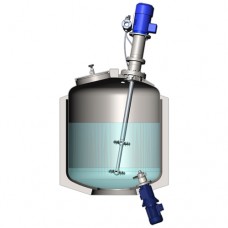
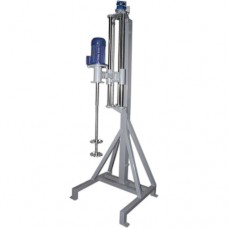
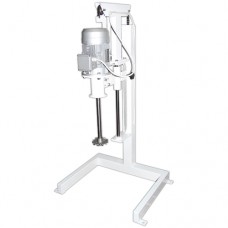
A dissolver is a special type of mixer that is used to mix materials with different physical and mechanical characteristics until a homogeneous, weighed consistency is obtained. It can be installed both in laboratories and in industrial premises. With its help, paints with mineral pigments, paints and varnishes of complex structure, creams are made, including several dissimilar ingredients and requiring high-quality mixing.
The production of varnishes and paints with pigments is a complex technological process, which is divided into seven stages.
Stages of manufacturing paintwork materials:
1. Preparation of the pigment composition.
2. The distribution of film-forming ingredients, which is very important for varnishes and paints containing a large amount of resins and desiccant.
3. Distribution of paintwork materials components and determination of the required quality parameters.
4. Mixing the pigment composition, which is the basis of any paintwork materials, with the prescription percentage of resin, varnish and other components specified in the recipe (functional additives, plasticizers and solvents).
5. Tinting (if necessary).
6. Checking quality indicators - the degree of hardness, viscosity, elasticity and other characteristics that are specified in GOST.
7. Cleaning and subsequent packaging of paintwork materials. The resulting mixture is cleaned from industrial impurities and trapped litter, film oxides and pigment elements that did not dissolve during mixing. For the latter, the finished product filtration method is used. Then the packaging of paintwork materials into containers is carried out.
The dissolver includes several devices that perform specific functions:
1. A steel frame that serves as a base for fixing other dissolver devices. There are three types: mobile, telescopic and stationary. Manufactured from high quality coated steel.
2. An electric motor that generates torque on the cutter. The motor power can be up to 30kW according to the technical specifications of the equipment.
3. A gearbox that transmits torque from the electric motor to the cutter shaft and changes the speed mode of rotation. The cutter can be of different diameters in accordance with the characteristics of the initial ingredients and the methods of their mixing.
4. A stainless steel container for mixing the mixture, where the necessary composition is prepared. The volume of the container is determined by the technical parameters of the dissolver.
The device can be equipped with one or two mixers, depending on its parameters. The high-speed cutter is complemented by a low-speed frame to improve the quality of the finished product. There are two types of dissolvers: with 1 or 2 drive shafts. Also, the planetary type dissolver is equipped with an electronic partial conversion system, which allows you to smoothly change the speed mode of shaft rotation.
Dissolver allows you to produce the following types of products:
1. Creams and lotions;
2. Water-dispersion and water-based paints;
3. Various types of suspensions;
4. Alkyd-based paintwork materials;
5. Putties;
6. Primers;
7. Sealants (liquid nails);
8. Shampoos;
9. Autochemistry.
1. The container is filled with liquid or dry ingredients manually or automatically. The volume of liquid substances is controlled by the operator of the equipment. Modern dissolvers are equipped with electronic scales that automatically control the amount of feed of various ingredients into the container. By adding dry ingredients to liquid substances, the risks of "dead zones" and sticking of dry ingredients to the walls of the tank are minimized.
2. The device is turned on, the speed mode of rotation of the cutter is selected and the quality of mixing of the components is controlled. At this stage, with the help of a dispersant, the mass is crushed to a homogeneous composition throughout the volume of the tank.
3. The remaining fillers are added and mixed until a homogeneous consistency. After the end of the process, the container with the resulting mixture is removed from the mixing zone and enters the bottling of finished products into containers.